

Losing weight is rarely just a matter of willpower. Many people seeking help have already tried multiple diets, lost weight temporarily, and then gained it back. That can be discouraging, especially if you are dealing with hunger, cravings, stress, hormonal factors, or health issues in the meantime.
Personal weight loss guidance therefore does not start with a standard weekly menu or a strict list of forbidden products. It begins with listening: what have you already tried, what worked for a while, where did you get stuck, and what fits realistically into your life? From there, a plan can emerge that takes into account your health, daily routine, preferences, medical history, and goals.
That personal approach is important because sustainable weight loss usually requires more than just eating less and exercising more. It also involves structure, medical safety, support during difficult moments, and building habits that you can maintain in the long run.
Why personal guidance is more than motivation
Many people think that weight loss fails because they are not disciplined enough. In reality, body weight is the result of multiple factors that influence each other. Diet and exercise play a role, but sleep, stress, medication, hormones, heredity, mood, environment, and previous weight loss attempts can also have an impact.
The program RIVM describes overweight as an important public health issue that affects many adults. That does not mean that everyone has the same cause or needs the same approach. That is precisely why personal guidance can help ask the right questions instead of following a generic diet again.
For example, a coach looks not only at what you eat, but also at when you eat, why you eat, and what happens at moments when you lose control. Do you experience strong cravings in the evening? Do you eat more often due to fatigue or stress? Do you skip meals and experience strong cravings later in the day? Are you taking medication that can affect weight gain? Details like these make the difference between a plan that looks good on paper and a plan that is actually feasible.
Personal guidance also means that you don't have to guess what is sensible every week. You receive structure, explanation, and adjustments. This can provide peace of mind, especially if you are used to starting strictly every time and becoming disappointed when things don't work out as hoped. Anyone who finds that losing weight on their own repeatedly stalls can benefit greatly from this. lose weight with professional help and more structure.
What personal weight loss guidance entails
Good guidance is not top-down control, but collaboration. You discuss your goals, health, eating habits, daily workload, and any previous experiences with diets or medication. Then, it is determined which steps are appropriate. Sometimes the initial focus is on meal regularity. Sometimes it is on a medical assessment, sleep, stress, exercise, or better managing hunger.
A personal plan can change over time. That is normal. Your body reacts, your schedule changes, and difficult periods are part of life. Guidance helps you avoid letting go of everything during these times, but instead makes adjustments in a way that remains feasible.
| Part | Standard diet | Personal supervision |
|---|---|---|
| Starting point | General schedule | Intake based on health, goals, and lifestyle |
| Nutrition | Fixed rules | Advice tailored to preferences, satiety, and daily rhythm |
| relapse | Often seen as failure | Used as information to improve the plan |
| Medical factors | Usually taken along in limited quantities | Discussed during medical assessment when relevant |
| Support | You mainly do it yourself | Regular check-ins, coaching, and adjustments |
| Long-term | Focus on quick results | Focus on sustainable habits and preservation |
This approach is not intended to force perfect behavior. The goal is for you to learn what your body and your daily life need to make a healthier weight possible step by step.
A plan that fits into your week
A plan that does not fit your work, family, budget, or energy level usually does not hold up. Personal guidance translates general advice into your real life. Someone with varying shifts needs different solutions than someone with fixed office hours. Someone who often cooks for others faces different challenges than someone who eats alone. Cultural eating habits, social occasions, and grocery budgets can also play a role.
Therefore, nutrition is not just about calories. Satiety, protein, fiber, portion size, regularity, and taste are at least as important. A good plan helps you put together meals that nourish and fill you up, without making you feel like your life revolves entirely around losing weight.
Movement doesn't have to start with intensive sports. For some people, walking, gradually introducing strength training, or scheduling more frequent short bursts of movement is much more realistic. The same applies to sleep and stress. If you consistently get too little sleep or are constantly under tension, it can be harder to regulate appetite, choices, and energy. Guidance helps you deal with this practically, without trying to change everything at once.
Anyone who wants to start thinking about achievable habits will find in this tips for losing weight that are sustainable additional starting points for nutrition, hunger, exercise, and daily structure.
Where medical guidance can make a difference
For some people, lifestyle counseling alone is not enough. This may be due to severe hunger, recurring cravings, hormonal factors, a medical history, or weight-related health risks. In such situations, medical guidance can be important to safely and carefully determine what is appropriate.
GLP-1 medication or GLP-1/GIP medication may be part of a treatment plan for certain people. These agents influence signals related to satiety and appetite, among other things. They are not a miracle cure and they do not replace healthy habits. However, they can provide support when used correctly, under medical supervision, and in combination with coaching.
Not everyone is eligible for this. A doctor must assess whether the treatment is medically appropriate and safe, based on your health, medication use, medical history, and potential risks, among other factors. Possible side effects, expectations, and alternatives should also be discussed openly. Ordering medication without proper medical supervision is unwise, as you will miss important check-ups, explanations, and adjustments.
At Healthy Weight Clinics, GLP-1 and GLP-1/GIP medication are used only under medical supervision and on the prescription of a qualified physician. The treatment is combined with coaching, lifestyle advice, and regular monitoring. You can read more background on this in the article about Medical weight loss with sustained attention to lifestyle.
Guidance on hunger, cravings, and emotional eating
Hunger and cravings are one of the biggest reasons why losing weight is difficult for many people to stick to. This is not a lack of willpower. Appetite is influenced by hormones, habits, sleep, stress, reward, food availability, and previous dietary restriction. For example, if you eat too little during the day, cravings may become stronger in the evening. If eating has become a way to relieve tension, it requires more than just a meal plan.
Personal guidance helps to make patterns visible. Not in a blaming way, but to understand what is happening. Sometimes a small adjustment to breakfast or lunch can already lead to less craving for snacks later in the day. Sometimes attention is needed for stress regulation, sleep patterns, or preparing for difficult moments.
Coaching can also help with all-or-nothing thinking. Many people recognize the feeling that a poor choice immediately ruins the entire day or week. In a sustainable process, you learn to recover more quickly. A birthday, a busy work week, or a vacation then need not be a reason to stop. It becomes a situation from which you learn and in which you choose a new direction.
What you can expect from a personal program
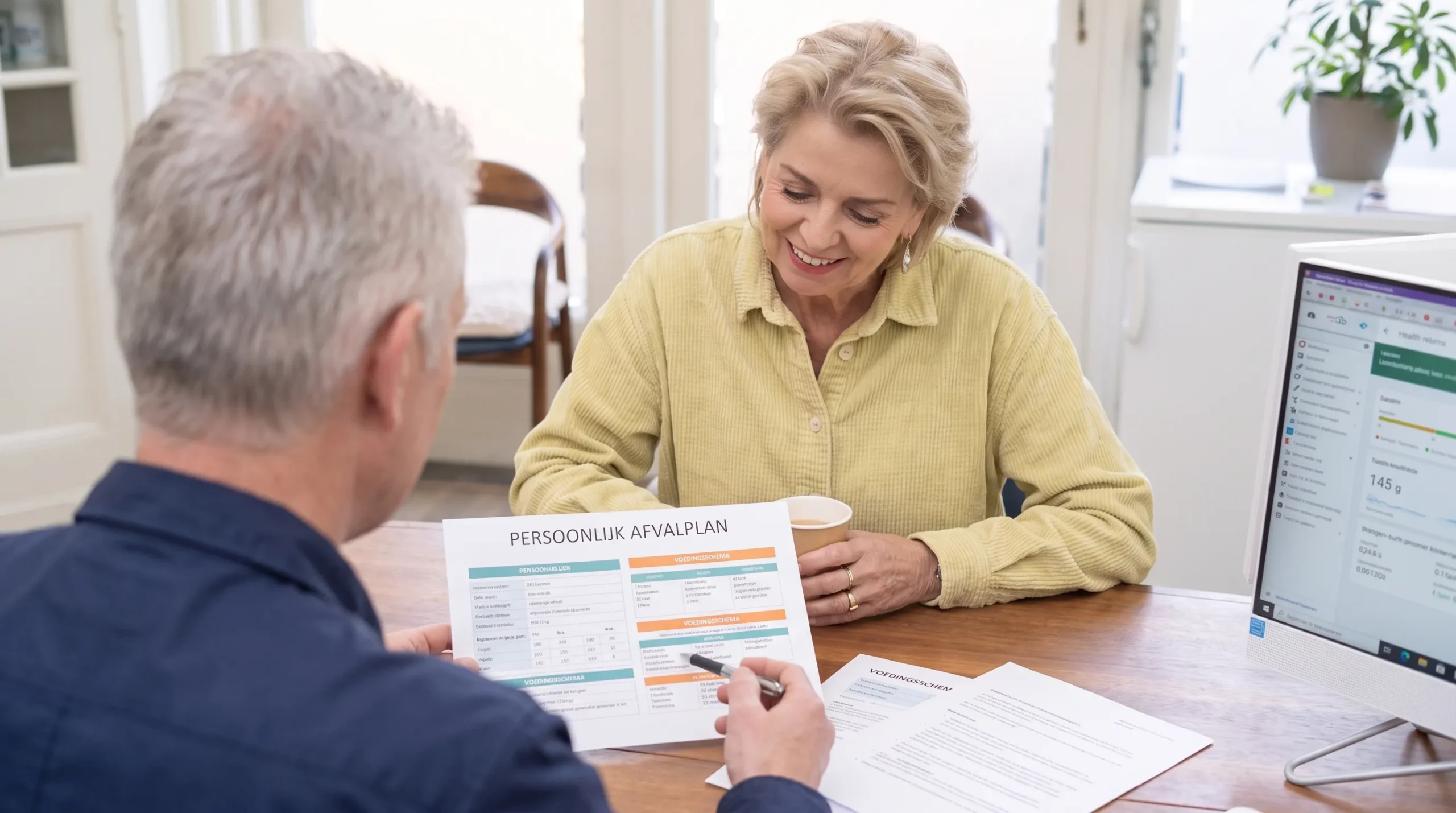
A professional weight loss program usually begins with a comprehensive intake. During this, your goals, medical background, weight history, lifestyle, and any existing complaints or risks are assessed. Depending on the situation, measurements such as blood values, blood pressure, or body composition may be relevant. The goal is to obtain a complete picture, not just a number on the scale.
A treatment plan follows next. That plan may consist of coaching, nutritional advice, lifestyle adjustments, and possibly medical treatment if appropriate. Regular check-ups help monitor progress and safety. During these appointments, you discuss not only weight but also hunger, energy, side effects, mood, sleep, exercise, and feasibility.
Important components of guidance may include:
- A medical intake and assessment of suitability for treatment.
- A personalized nutrition plan that fits your daily routine and preferences.
- Coaching for motivation, relapse, emotional eating, and habit formation.
- Lifestyle advice regarding sleep, stress, exercise, and recovery.
- Regular progress measurement and adjustment of the plan when necessary.
- Attention to the phase after medication or after achieving a healthier weight.
Good guidance therefore looks beyond rapid weight loss. It is also about learning what you need to live a healthier life, deal better with your body's signals, and gain more confidence in your own choices.

When personal guidance is particularly beneficial
Personal guidance can be valuable for anyone who finds that standard advice is not enough. It can be particularly suitable if you have frequently lost weight and gained it back, if hunger or cravings have a significant impact, or if you repeatedly become unbalanced due to stress, lack of sleep, or emotional eating.
Guidance can also be important for weight-related health complaints. Examples include high blood pressure, prediabetes, sleep apnea, PCOS, joint problems, fatty liver, or high cholesterol. This does not automatically mean that one specific treatment is necessary. However, it does mean that medical assessment and careful monitoring can be advisable.
Some people postpone seeking help because they think they should be able to manage on their own. That feeling is understandable, but not always helpful. Asking for help is not a sign that you have failed. In fact, it can be a way to finally choose an approach that takes your body, circumstances, and health into account.
How to get off to a good start yourself
Even with guidance, you remain the one who makes the daily choices. The strength of a personal trajectory is that you do not have to bear those choices alone. You receive direction, but your honesty and involvement help to improve the plan.
A good start begins with openness. Share what you find difficult, even if you feel ashamed about it. Discuss previous weight loss attempts, binge eating, side effects, medication use, and concerns about costs or injections. The more complete the picture, the better a professional can assess what is safe and appropriate.
This attitude often helps during the process:
- Choose small changes that you can stick with for several weeks.
- Discuss obstacles early, instead of waiting until you get stuck.
- Measure not only weight, but also energy, sleep, clothing, fitness, and health signals.
- Ask for an explanation if you don't understand something, especially regarding medication or side effects.
- Think from the start about habits you want to maintain later on.
The pace does not have to be perfect. A medically responsible trajectory revolves around safety, feasibility, and long-term improvement. Sometimes it goes fast, sometimes slower, and sometimes stabilization is already a valuable step.
Frequently asked questions about personal guidance for weight loss:
Is personal guidance for weight loss suitable if I have already tried many diets? Yes, that is precisely when guidance can be beneficial. Previous attempts provide valuable information about what didn't work for you. A personalized program examines the causes behind relapse, hunger, eating behavior, and lifestyle, so that the plan can better align with your situation.
Does personal guidance automatically mean I will receive GLP-1 medication? No. GLP-1 or GLP-1/GIP medication is only suitable for certain people and always requires a medical assessment. Support can also consist of coaching, nutritional advice, lifestyle adjustments, and monitoring without medication.
What if I am afraid of injections or side effects? Those concerns are very normal. Always discuss them with a medical professional before making a choice. A doctor can explain administration, possible side effects, contraindications, and alternatives, so that you do not have to make a decision based on fear or incomplete information.
How quickly will I see results with personal guidance? That varies from person to person. The result depends on your starting point, health, treatment plan, medication suitability, lifestyle, and how your body responds. A reliable program does not promise fixed numbers, but carefully monitors your progress and adjusts when necessary.
What happens after stopping or reducing medication? That should be part of the treatment plan. Coaching and lifestyle advice are important for building habits that provide support even after the medication phase. Always discuss stopping, reducing, or adjusting medication with the treating physician.
Take the first step with guidance that suits you.
If you find that losing weight alone is no longer working, you don't have to start over with a strict diet. A personal, medically supervised approach can help bring calm, clarity, and security to your weight loss journey.
At Healthy Weight Clinics The GLP-1 Plus method is combined with medical supervision, one-on-one coaching, and lifestyle advice. Together, we look at your health, goals, medical background, and daily life. This ensures you do not receive a standard program, but rather guidance that suits you and is aimed at responsible, sustainable results.
An initial consultation can help discover which approach is appropriate for your situation, without judgment and without pressure.


